Physical changes of matter: is it the same old stuff or something new?
Matter changes in countless ways. Sometimes the matter just changes its appearance and other times the changes result in a rearrangement of the matter into something entirely new. This is the difference between a PHYSICAL CHANGE and a CHEMICAL CHANGE.

Physical Change – a change in the appearance of matter only. It’s as if the matter has put on a costume of sorts. The matter may look differently but it is the same ol’ stuff.
Look for physical changes in the following ways:
- observing a change in shape or size
- mixing substances together
- observing a change in the state of matter
1. Changing the shape or size of matter is a physical change


Changing the shape of matter doesn’t change the actual matter itself. Chewing food with teeth, chopping a tree, breaking a window, molding clay into pottery are all simple examples of a physical change. The matter is the same as before the change. No chemistry is taking place as long as the chainsaw doesn’t burn the wood.

2. Mixing matter together is just a physical change

Placing different items in the same bowl to make a trail mix or having a bowl of cereal with marshmallows is just a mixture. The individual properties of candies, nuts, and pretzels would all stay the same. Similarly, chemistry typically does not occur when we mix the dry ingredients when baking. The substances are physically placed in the same bowl and could physically be separated if they needed to be.

Making rock candy is filled with physical changes. Dissolving sugar into water is a physical change. Even though you can’t see the sugar when it is dissolved, it is still present in the water. It is still sweet and retains all of its properties. Adding food coloring to the water is another example of a physical change. The water is still water. The third major step in making rock candy removes the water and allows the sugar to crystallize on the stick. The water is evaporating into water vapor but is still H2O.
3. Changing the matter into different STATES is also a physical change.

When matter goes through a CHANGE of STATE it is going through a physical change. The three main states of matter found at room temperature are SOLID, LIQUID, and GAS. When matter gains or loses heat to change state it may look different but it still has the same chemical formula. Ice, water, and water vapor are all just H2O in different forms.
In science, the word “states” is going to refer to the four main forms in which matter can exist. The elements of matter can be found as solid, liquid, gas, and plasma. The difference between these forms is the amount of heat the particles of a substance has.
Particles SPEED UP and SPREAD OUT when heat is added.

All matter is made up of particles and they are always in motion. This idea is called the “kinetic theory” and it helps us understand which state of matter a substance might be in. Look at the graphic of particles to the left. Try to follow one of the RED particles on its random journey within the box. Notice that sometimes it is fast and sometimes it is slow.
What happens when your particle hits a slower moving particle? Yours gets slower as it gives away some of its heat energy. What happens when it collides with a particle that is faster? Your particle gets faster as it gains heat energy from the collision. Thermal energy (heat) is transferred during every collision. It always leaves the faster particle and is given to the slower one. In this way the particles are getting closer and closer to the same speed.
Adding heat energy to the particles in the box would cause them to respond in TWO ways. The particles get faster when given energy and because they are faster they must take up more space. We’ll say they “speed up” and “spread out”.
the States of Matter
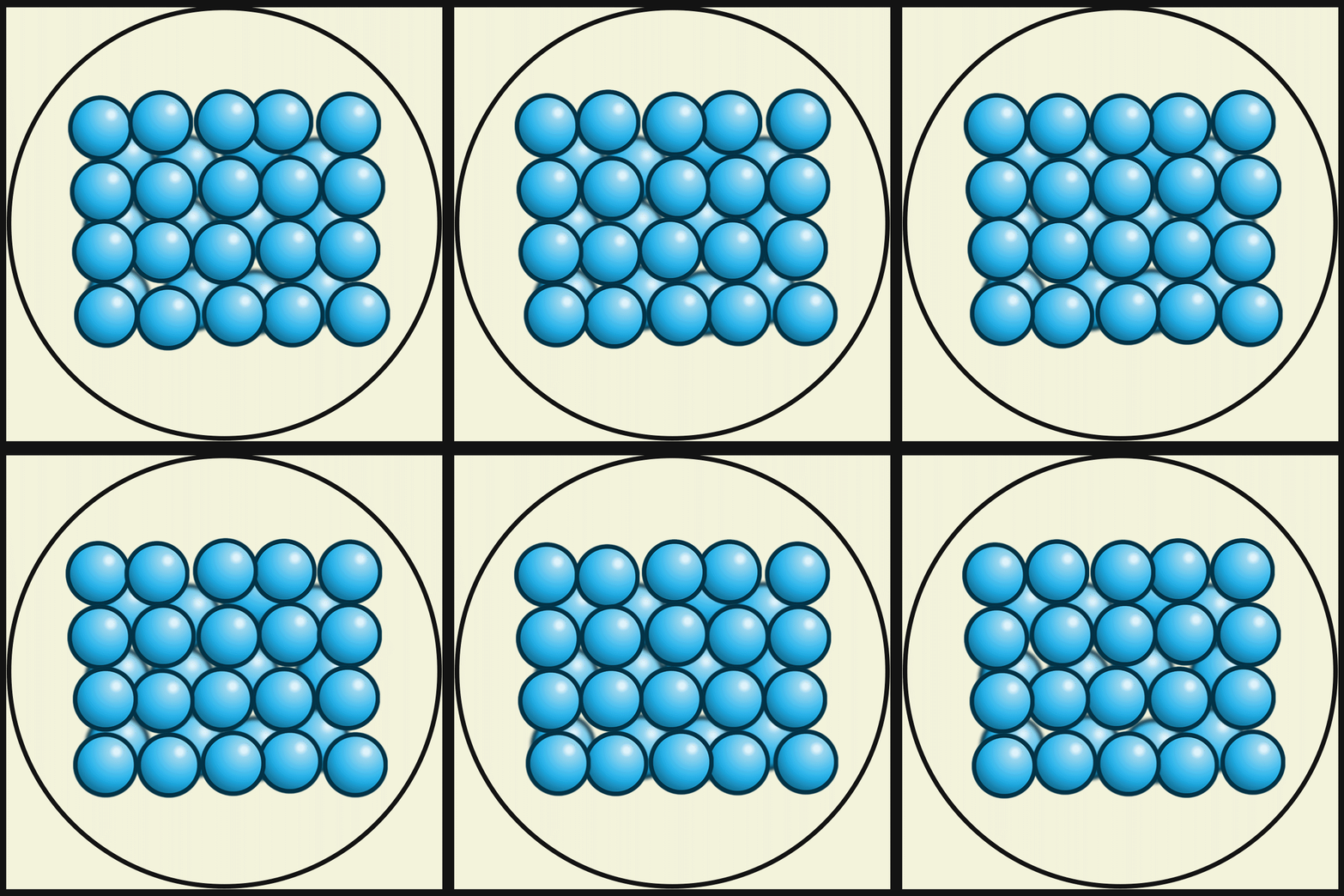
Particles in a SOLID are found very close together and have only a little motion. Most of the elements are found in the solid state at room temperature. The floor might not look like it is moving but at the molecular level it most certainly is. Solids have a definite shape and a definite volume.
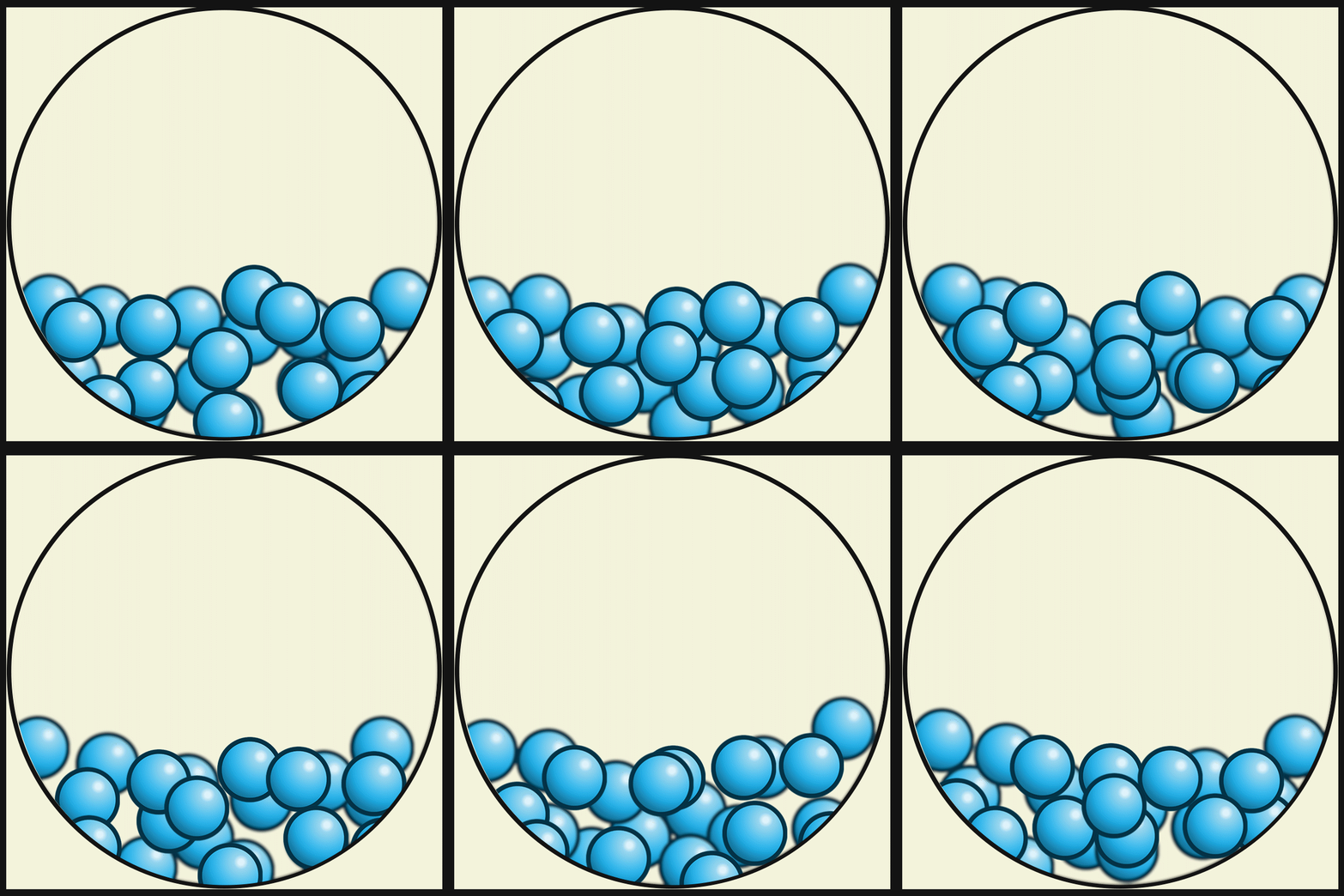
Adding heat energy to a solid will cause the particles to speed up. As they get faster they spread out away from each other. The particles become less attracted to each other and have the ability to flow. If they slide past each other enough we say the substance has MELTED and it is now called a LIQUID.


Liquids have a definite volume but they can change their shape to their container.
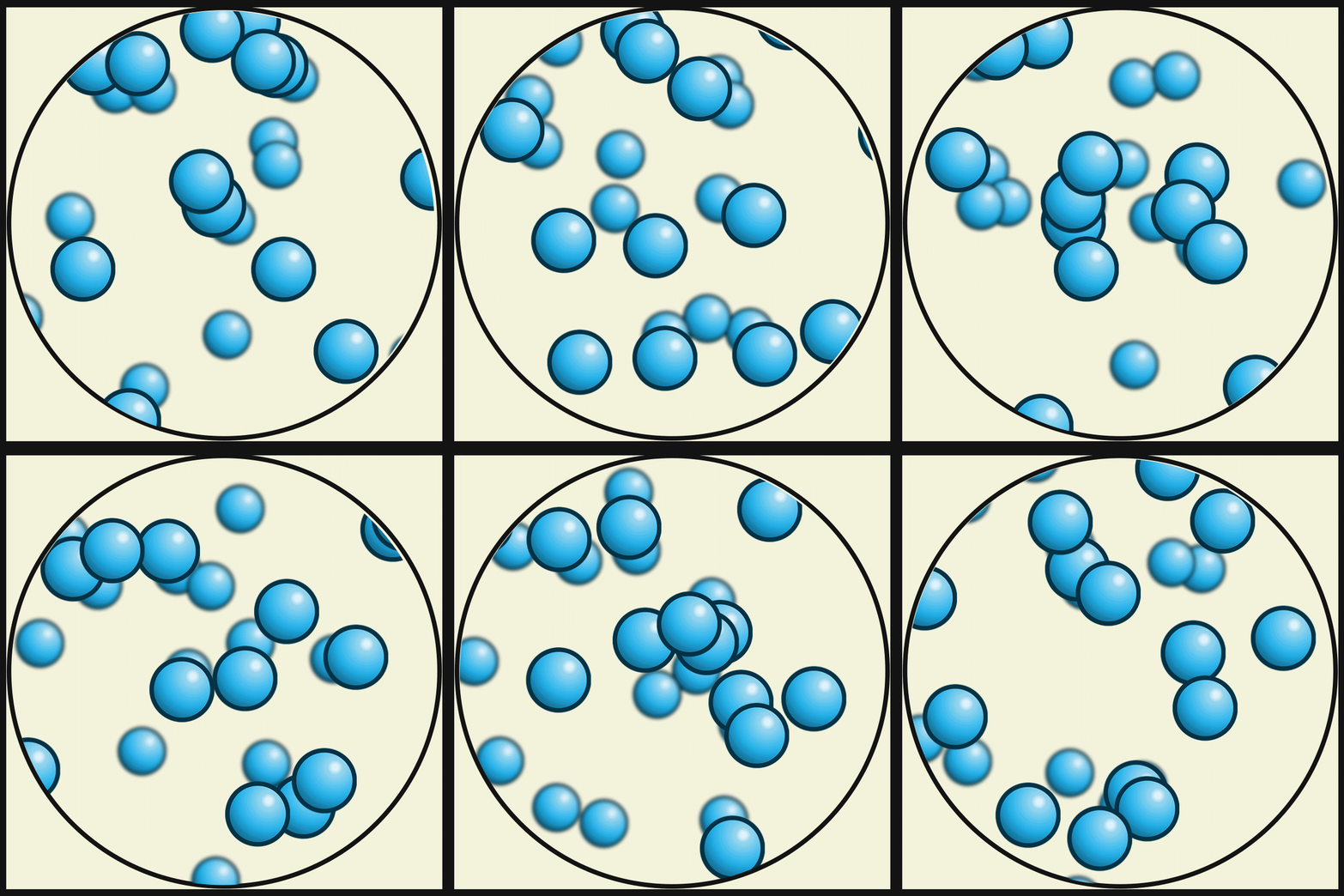
Adding heat energy to a liquid will cause the particles to speed up and spread out away from each other even more. If they have enough energy to punch through the surface tension of the fluid they can leave the fluid as a GAS.
There are TWO ways this can happen. BOILING and evaporating. Boiling occurs when we ACTIVELY add energy to a liquid. We place a pot of water on the stove or over a campfire. When particles of liquid get fast enough they start to form bubbles of gas but might not be able to rise to the surface due to the air pressure above the pot. All of the atmosphere is pushing down on the surface making it difficult for the liquid to boil. In fact, a pot of water in the mountains will boil faster (at a lower temperature) than a pot of water at sea level. With less air above you in the mountains there is less air PRESSURE and the bubbles can form more easily.


Liquids EVAPORATE when this energy is gathered from the surrounding matter. This is a PASSIVE process because we do not need to actively raise the temperature to make this occur. Imagine a small puddle of water left on the counter before you go to bed. Much of that (if not all of it) liquid water will be gone by morning. This is often a slow process but it doesn’t have to be. We can speed up evaporation with some wind. The energy of moving air gets added to the particles. With enough energy they can leave. This is why we feel cooler when the water on our skin evaporates. It is taking heat from your body and using it to turn water into a gas.


Sometimes matter skips the liquid phase entirely. Substances like DRY ICE does this. We say it is “dry” because it doesn’t melt, it goes through SUBLIMATION and becomes Carbon dioxide gas.


The last of the states of matter doesn’t occur on Earth as much as the other three. PLASMA occurs when a gas is so super-heated that the electrons are released from the protons and neutrons they usually are attracted to. A star (like our Sun) is in a state of plasma.
REVIEW: Adding heat will cause the following processes…

When heat is added to a solid it is melted into a liquid. When heat is added actively to a liquid it is boiled into a gas. When heat is added passively to a liquid it evaporates into a gas. When some matter is heated it sublimates, which means it skips the liquid phase and goes straight to gas.
When heat is removed from matter the opposite occurs.

Review of adding and removing heat…
